

















About Madagascar
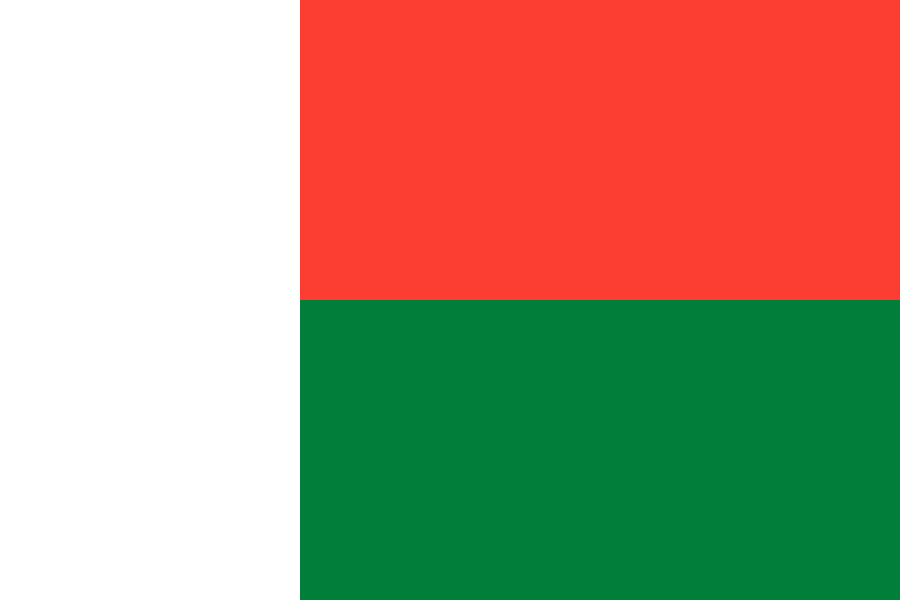
Madagascar lies off the east coast of Africa and is an island nation situated in the Indian Ocean. It is the fourth largest island in the world and is home to 5% of the worldâs plant and animal species most of which are unique to Madagascar. The island as a whole plays host to only two seasons- the wet season and dry season through the climate varies dramatically with changing elevation and as Madagascar is an island which has various high mountains you will see a large range in precipitation and temperature averages as you move around the island. It has a narrow coastal plain that gets higher as you move inland as the mountains lie in the central part of the island.
The weather conditions are representative of a hot subtropical climate that sees rainfall in the months from November to April and a drier season from May through until October. With 4828 kilometres of coastline, much of the island is moderated by coastal sea breezes and prevailing trade winds. The benefit of visiting Madagascar is that there are so many various activities to take part in as you can make the most of the extensive coastline and the mountain ranges, so in any given day you can spend it hiking or diving- whatever it is that tickles your fancy.
WEST and SOUTHWEST
These areas are best described as âsemi desertâ and the arid conditions can get particularly harsh in the height of summer, and rainfall is scarce even in the rainy seasons. From November to March moving around a struggle, so itâs best to find your self a nice air-conditioned hotel or pack your bathing suit and cool off in the ocean. If rain does fall it will be during these periods, so the tropical showers come as cooling relief from the blistering sun. In stark contrast, the winter months in the west and south-west are comparatively pleasant- the months are home to clear blue skies, cooler temperatures and basically no rainfall.
EAST and NORTHEAST
Any time of the year brings rainfall and cloudy overcast skies in these regions. However, in the âdryâ season of winter, the rain doesnât last for long so you won't have to run for shelter for too long and sunny skies shouldnât be too far away. In the months of July to September, the weather gets so tumultuous that the sea is too dangerous to travel by boat. Across all regions, its best to avoid January to March as there is heavy rainfall in most areas of the country makes many roads muddy and almost impossible to drive on, so this limits outdoor activities. During this period the risk of cyclones is particularly high, especially if you are in the east and northeast of the country.
ANTANANARIVO
Antananarivo is the capital of Madagascar and lies in the centre of the island. The city is built on the summit and slopes of a long and narrow rocky edge extending north and south for about 4 km. At its highest point, it rises to about 660 ft. Antananarivo itself lies about 4,183 ft above sea level. The average temperature in the capital is slightly cooler than in the coastal regions, due to its higher elevation. In the summer months of December to January, the average temperature sits at 21 ºC, before cooling down to 20 ºC in March and April and reaching 17 ºC by May. The summer months, on average, see daily highs of 26 ºC and lows of 16 ºC or 17 ºC. This period is also the wettest time in the city, with December, January and February seeing 7, 11 and 9 days of rain per month on average. Once you move into autumn temperatures begin to fall slightly and rainfall begins to wean. March, April and May see average highs of 26 ºC, though the minimums fall to 12 ºC to 15 ºC. March sees 7 days of rain for the month, while May only sees 3 ºC on average. Winter in the capital sees maximum temperatures of 21 ºC while the minimums fall to 9 ºC or 10 ºC. Rainfall is at a minimum with only lighter showers occurring on 2 or 3 days per month.
TULEAR
Tulear (or Toliara as it is often known) lies on the southern coast and is noticeably warmer than Antananarivo, due to its lower elevation and coastal location. Summer sees average highs of 33 ºC which is significantly warmer than the 28 ºC that Antananarivo sees. The average daily temperature throughout summer is 28 ºC and minimums only fall to 23 ºC. Even throughout winter, the maximums sit in the high 20âs and the mercury tickling into the 30âs is not uncommon. Tulear also sees significantly less rainfall, with the wettest month of January only average 4 days of rain and from April until October rain is recorded on average zero days per month.
WILDLIFE
One of the things Madagascar is most famed for is its extensive wildlife. Madagascar has long been known to play host to unique and diverse species of wildlife. The island is in fact home to more than 250,000 species of which 70% are found nowhere else in the world. Unfortunately, Madagascar is one of the poorest countries in the world, due partly to the corrupt government who was last in power. Fortunately, the recently elected new president Marc Ravalomanana is working hard to move away from the old system and attempting to attract foreign investment that will help to sustainable business models and ensure that any foreign aid that is achieved is well spent and correctly distributed.